What Happens to Debt After Death in the UAE? Loans, Credit Cards and Heirs
In the UAE, a deceased person's credit cards, loans and mortgage are paid from their estate before anyone inherits. Family members are not personally liable unless they signed as co-borrower or guarantor. Here is what banks do, how the estate settles debts, and what heirs should and should not pay.
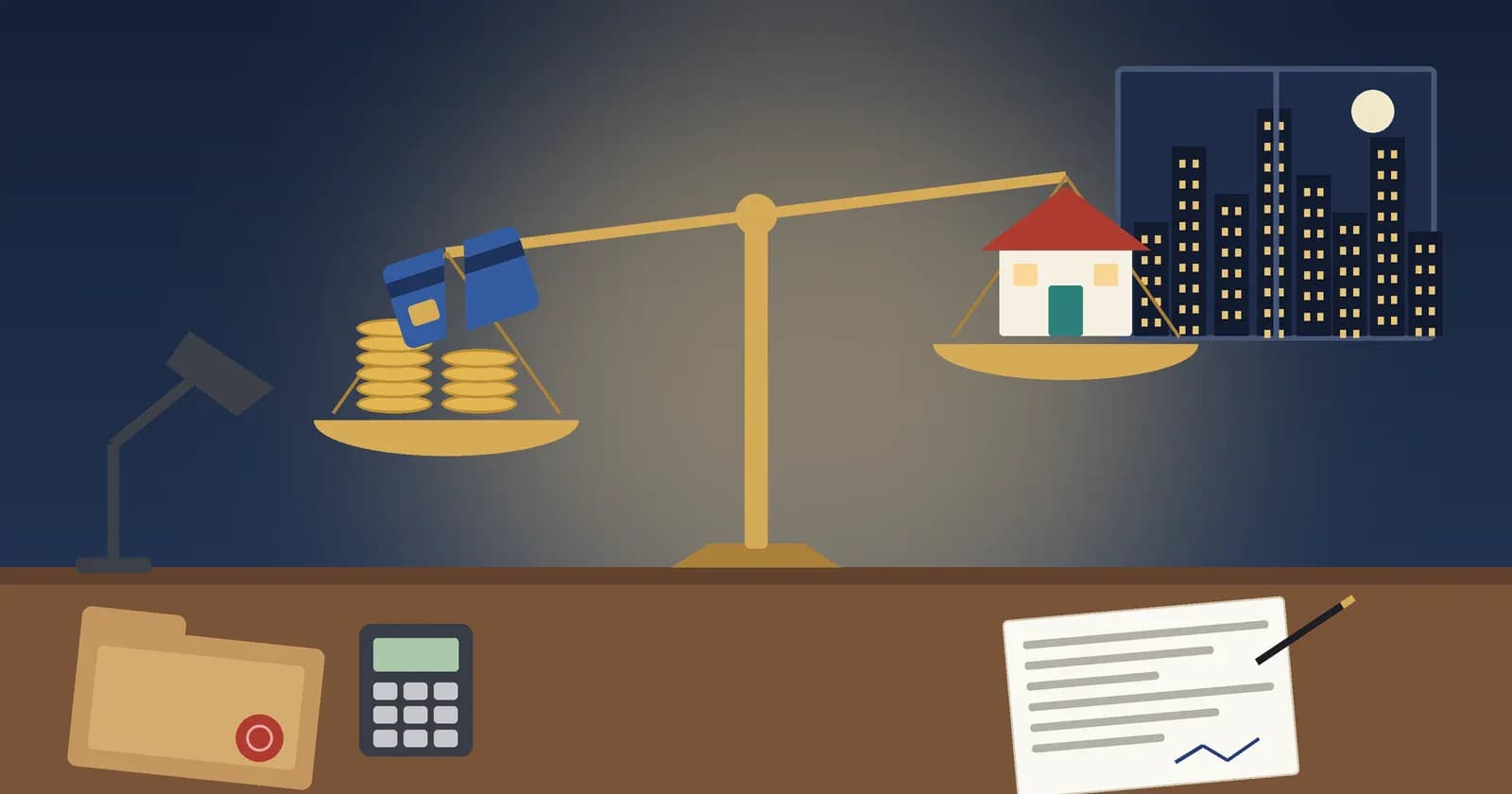
When someone dies in the UAE owing money on a credit card, personal loan, car loan or mortgage, the debt does not simply disappear, but it also does not pass to the family's own pockets. The bank's claim is against the estate: what the person left behind is used to pay creditors first, and only what remains goes to the heirs. A spouse, child or sibling is personally liable only if they signed for the debt themselves, for example as a co-borrower or guarantor.
That one distinction, estate versus family, is what most grieving families are never told. It is also what some collection calls quietly blur.
Who pays a deceased person's debts in the UAE?
The estate pays, before anyone inherits. UAE law sets a clear order for what happens to a person's assets after death.
For estates under the federal Personal Status Law (Federal Decree-Law No. 41 of 2024), Article 201 lists it as:
- the proper preparation and funeral of the deceased;
- settlement of the deceased's debts;
- carrying out any will, within the one-third limit unless the heirs agree to more; and
- dividing what is left among the heirs.
For non-Muslim estates under the civil personal status regime, the executive regulations (Cabinet Resolution No. 122 of 2023, Article 25) set a similar order: funeral expenses, the costs of managing the estate and carrying out the will, the executor's or administrator's fee, and then debts, all before the will is carried out or anything is distributed.
The principle behind both is old and simple: there is no inheritance until the debts are paid. Heirs receive the net estate, not the gross one.
Are family members personally liable for a deceased relative's debt?
Generally, no. The person who signed the loan or card agreement is the one who owes it. When they die, the creditor's recourse is to their estate and to any security they gave the bank, not to the savings, salary or property of their wife, husband, children or parents.
UAE courts have applied this in banking cases. In a ruling reported by UAE law firms, the Abu Dhabi Court of Cassation limited heirs' liability for a deceased customer's bank debt to the value of the estate they inherited and the securities the deceased had given, and refused to extend it to the heirs' personal assets. The court relied on the inheritance principle above and on Article 121 bis of the Central Bank Law, which requires banks to take adequate guarantees for loans to individuals (CBUAE Rulebook).
There are real exceptions, and they all come down to what you signed:
- Co-borrower or joint applicant: you are a borrower in your own right and remain liable.
- Guarantor: a personal guarantee you gave stays your obligation.
- Security cheque or other security you provided: the bank may look to it.
- Joint credit or a debt in both names: check the agreement; your part does not end with the other person's death.
If none of these apply, you do not owe the bank from your own money. Polite, firm language helps: "Please direct the claim to the estate."
What happens to credit cards and personal loans?
In practice, a few things usually happen once the bank learns of the death:
- The cards are stopped. Supplementary cardholders should stop using them straight away, and nobody should keep using the deceased's card, app or online banking.
- The accounts are blocked. Banks freeze a deceased customer's accounts until a court document tells them who can deal with the money. We explain that step in what happens to a bank account after death in the UAE.
- The outstanding balance becomes a claim against the estate. The bank files or registers it in the estate process like any other creditor.
- Insurance may cover some or all of it. Many loans and some cards are sold with credit life or payment protection cover. Ask the bank in writing whether a policy exists, request a copy, and give them the death certificate so a claim can be opened. Do not assume there is none.
Interest and fees after death are a question to raise with the bank and, if needed, a lawyer. We have not seen an official rule that applies to every case, so we do not give one here.
What about a mortgage or a car loan?
Secured debts work a little differently, because the bank holds security over a specific asset.
- Mortgage: the mortgage stays registered on the property. The heirs, or the executor, can usually choose between paying off the loan (often with a life insurance payout, since mortgages commonly require cover) and selling the property, with the bank paid from the sale. The property cannot simply be transferred free of the mortgage.
- Car loan: the car is usually mortgaged to the bank in the vehicle record. The loan has to be settled, or the bank's interest dealt with, before the car can be sold or transferred.
How does the estate actually settle the debts?
Through the court process, not by the family paying creditors one by one.
Under the estate chapter of the federal Civil Transactions Law (Federal Decree-Law No. 25 of 2025, in force since 1 June 2026), a court-confirmed or court-appointed executor takes over the estate, inventories assets and debts, notifies creditors, and pays debts that are not disputed with the court's permission. Disputed debts wait for the court. The same law stops an heir from disposing of estate assets or collecting money owed to the estate before receiving a certificate of their share, and once the executor's appointment is recorded, creditors pursue the estate through the executor.
For a non-Muslim with a registered DIFC will, the executor named in the will applies for probate in the DIFC Courts and handles the debts as part of that. Our step-by-step guide to DIFC will probate walks through it.
Two practical warnings for families:
- Do not pay estate debts from your own money unless you have decided to, with advice. It is not usually required, and getting it back can be slow.
- Do not take or sell the deceased's assets early, even with good intentions. Distributing before the debts are known can leave the person who took them answering to creditors later.
Can a will protect your family from your debts?
A will cannot make debts vanish. Debts are paid before any will is carried out. What a will can do is make the process faster and calmer:
- name an executor you trust to deal with banks and creditors from day one;
- reduce the risk of a long dispute over who represents the estate; and
- sit alongside sensible insurance, so loans are cleared by a policy rather than by selling the family home.
Without a will, the family usually has to wait for the court to establish the heirs and, where needed, appoint someone to manage the estate. Our guide to what happens without a will in Dubai explains that route. If you are a non-Muslim with assets or loans in Dubai, a registered DIFC will is one common way to plan for it.
Frequently asked questions
Do I have to pay my husband's credit card debt after he dies in the UAE?
Not from your own money, unless you signed for it as a co-borrower or guarantor or gave the bank a security cheque. The debt is paid from his estate before anything is inherited.
Are children responsible for their parent's loans in the UAE?
No, not personally. Children inherit only what is left after the parent's debts are paid, and the bank's claim is limited to the estate and any security the parent gave.
What if the debts are bigger than the estate?
The creditors share what the estate has according to the priority rules, and the heirs simply inherit nothing. Heirs who did not sign for the debt are not asked to make up the shortfall from their own assets.
Does a guarantor still have to pay if the borrower dies?
Usually yes. A guarantee is the guarantor's own promise to the bank, and the borrower's death does not cancel it. Read the guarantee and take advice before paying.
The Deed Box helps families in the UAE and abroad with wills, powers of attorney and the documents an estate needs. We are not a law firm, so for a dispute with a bank or a complex estate, speak to a UAE-licensed lawyer.
Sources reviewed 30 October 2026: Federal Decree-Law No. 41 of 2024 on Personal Status (Article 201); Cabinet Resolution No. 122 of 2023 (Article 25); Federal Decree-Law No. 14 of 2018 on the Central Bank, Article 121 bis (added by Federal Decree-Law No. 23 of 2022); Federal Decree-Law No. 25 of 2025 on Civil Transactions (estate liquidation chapter); a reported Abu Dhabi Court of Cassation ruling on heirs' liability for bank debts. This is general information, not legal advice; the official Arabic texts prevail.